Using Creativity in Therapy
One of the things I feel most grateful for in my therapy work is the chance to listen to people’s stories. But storytelling doesn’t come naturally for everyone, and even when it does, words alone don’t always capture the full depth of what someone is going through.
In my practice, I often meet people who find it hard to put their thoughts, feelings, and inner world into words. They might feel anxious, overwhelmed, disconnected, or simply unsure why they react the way they do. They’ve thought about it endlessly, yet something still feels tangled or buried so deep that talking about it becomes difficult. Words can take us part of the way, but some experiences live deeper than language, and talking alone can’t always reach them. This is where creativity becomes a doorway.
When we draw, move figures around a board, build a scene in a sand tray, or choose colours and shapes that “feel right,” something different happens. We bypass the part of the mind that tries to explain and justify, the part that works hard to create a coherent story because it’s always trying to make sense of things. Instead, we tap into the part that feels and experiences, the part that doesn’t always speak in sentences. Clients often describe a sense of relief or clarity afterwards, as if something inside them finally had space to speak.
I always explain this approach at the beginning of our work together. Creativity is an invitation rather than an expectation. Clients choose whether they want to try it, and we agree on a clear structure so the process feels safe and contained. Usually, we set aside an agreed amount of time for the activity, and then some space afterwards to reflect on what came up. Over the years, I’ve seen how powerful these moments can be.
Drawing the inner experience
One client lived with a constant sense of anxiety that affected everything, her sleep, appetite, studying, and relationships. She couldn’t explain where it came from. I invited her to draw what the anxiety felt like inside her body.
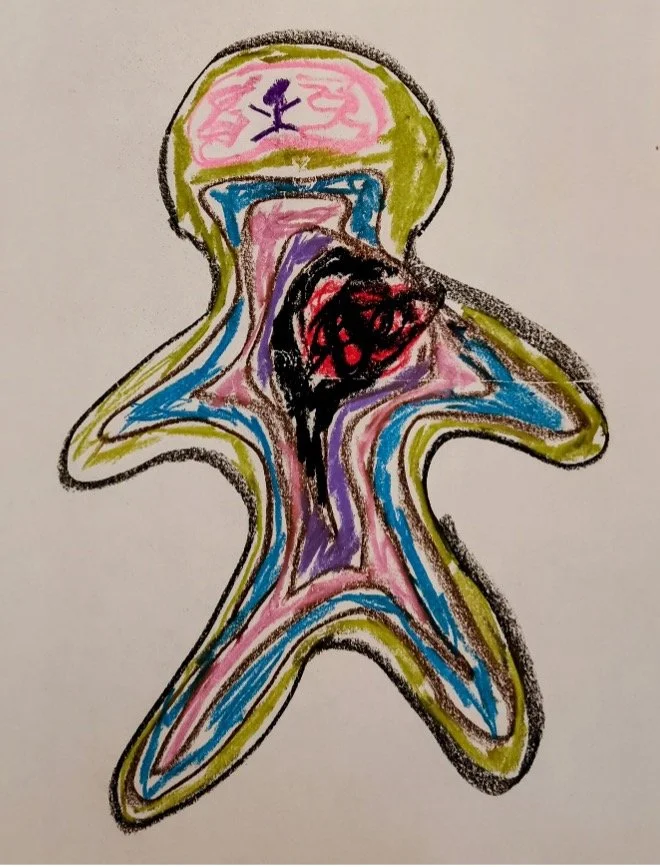
Through colours, shapes, and textures, she created something that captured her experience far more clearly than words had. As we explored the drawing together, she began to notice how the anxiety actually lived in her body, where it tightened, where it pulled, where it felt heavy or chaotic. This embodied way of working helped her see that her anxiety wasn’t just a thought or a story in her mind, but a real physical experience she had been carrying for a long time.
Understanding it in this way made it feel more tangible, and strangely more manageable. Instead of a vague, overwhelming fog, it became something with shape, form and meaning. That shift alone helped her feel more grounded.
Visualising a safe space
Another client found it extremely difficult to leave home because of anxiety and depression linked to work stress and relationship struggles. Home was the only place that felt safe. Knowing she loved drawing, I invited her to imagine and draw her “safe space.” She took her time and created it digitally between sessions.
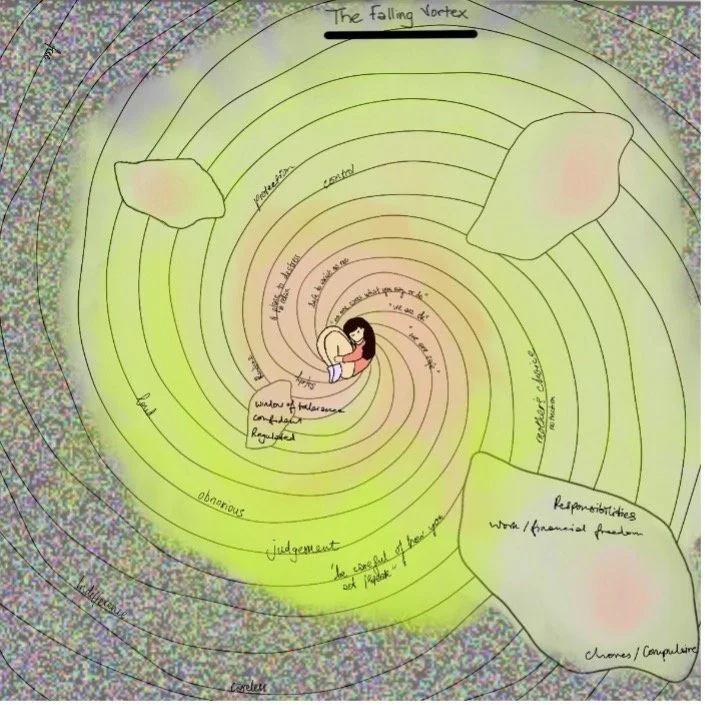
When she brought it back, the drawing became a window into understanding what safety meant to her, and what made the outside world feel so threatening. As we explored it together, she could feel in her body the difference between comfort and fear, what helped her settle, and what made her tense. From there, we used the drawing to imagine what it might be like to gently expand her safe space, one small step at a time. The colours, shapes and details she had created helped her picture what “a little more safety” could look and feel like in real life. Together, we linked those imagines steps to simple, practical things she could try outside her home, so going out felt less intense and overwhelming for her. It allowed us to approach her experience in a way that felt manageable, without pushing her beyond what she could tolerate in the present moment.
Exploring identity through a Tree of Life
With a young person who felt lost and unsettled about their identity and future, I introduced the idea of a “Tree of Life.” They were also navigating neurodivergence and gender identity, which often made their inner world feel fast, layered, and difficult to organise. The idea of drawing a tree, with roots, trunk, branches, leaves, fruits, and flowers, gave them a different way to express what was happening inside.
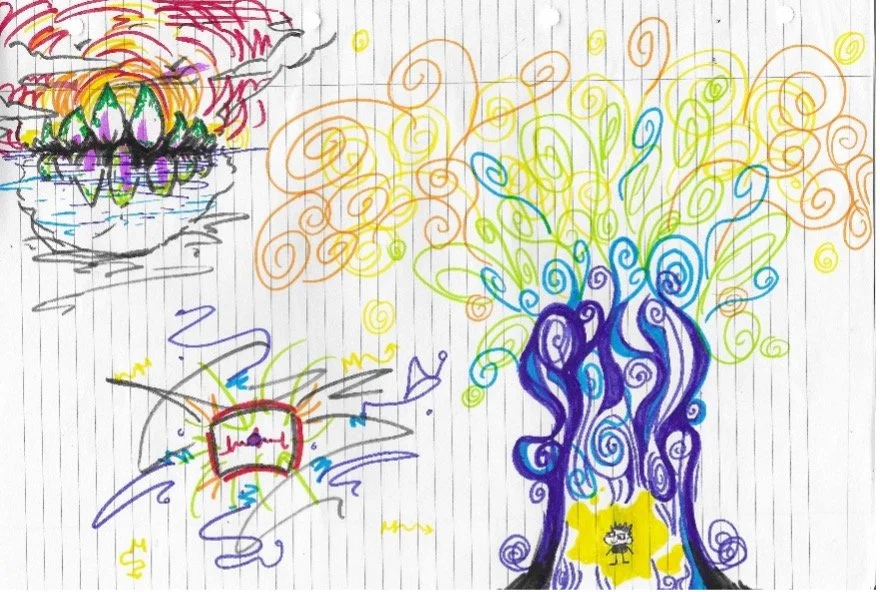
They filled each part of the tree with something meaningful: their strengths, values, hopes, support network, and the qualities they carry. For them, the creative process helped take confusing internal questions and place them outside of themselves in a clearer, more structured way. Instead of everything swirling around inside, they could see their story taking shape in front of them.
As we explored the drawing together, they began to reconnect with parts of themselves they had forgotten. Seeing their story laid out visually made their inner world feel less chaotic, and offered a sense of direction at a time when so much felt uncertain. It helped them feel more connected to who they were and who they were becoming.
Mapping relationships with figures and a wooden board
Sometimes relationships feel messy and hard to make sense of, especially when there are conflicts, shifting boundaries, or trust issues. In those moments, I often bring out a wooden board and small figures. Clients place each figure to represent the important people in their life.
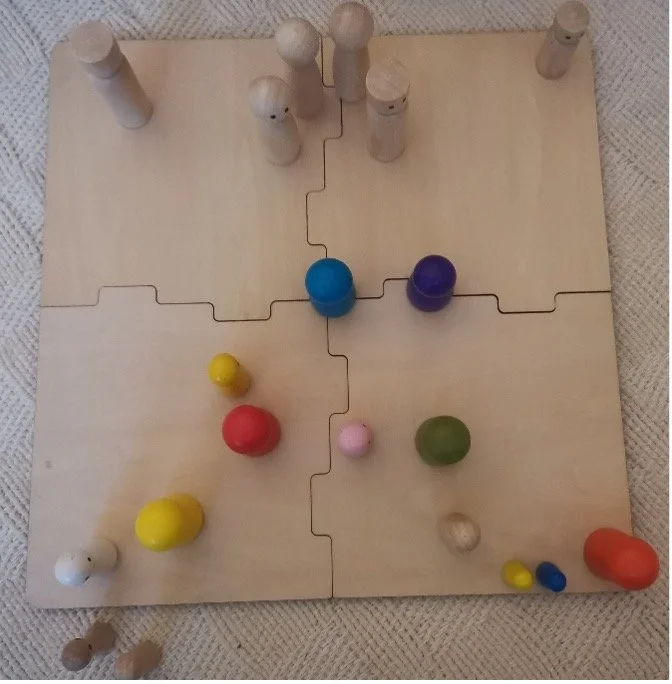
Seeing everything laid out in front of them often brings surprising clarity. Moving a figure closer or further away can stir emotions that talking alone wouldn’t reach. It turns an internal tangle into something visible and felt easier to understand.
As we explore the board together, clients often notice things they hadn’t realised before, who they feel drawn to, who they hold at a distance, where they feel tension or stuck. The simple act of moving the figures helps them sense, in their body, what feels right and what feels uncomfortable. It becomes easier to name things that were previously unspoken, to recognise patterns, and imagine new ways of relating. What once felt confusing starts to feel clearer, and clients often leave with a clearer sense of what they need in their relationships.
Why creativity matters
What I love about creative work in therapy is that it doesn’t require artistic skill. It isn’t about producing something beautiful. Creativity gives form to feelings that don’t yet have words and offers a gentle way to explore parts of yourself that might otherwise stay hidden. It can reveal things you didn’t realise you knew and create moments where your inner world feels seen and understood.
For many clients, these moments become turning points, small but meaningful shifts that help them understand themselves in a deeper way.
Creativity isn’t a magic solution, but it is a powerful companion to talking therapy. It offers another language and another way of meeting yourself. And sometimes, that’s exactly what’s needed.
Written by Kangli
(All images included in this blog are used with client consent. Written examples are anonymised to protect confidentiality.)